
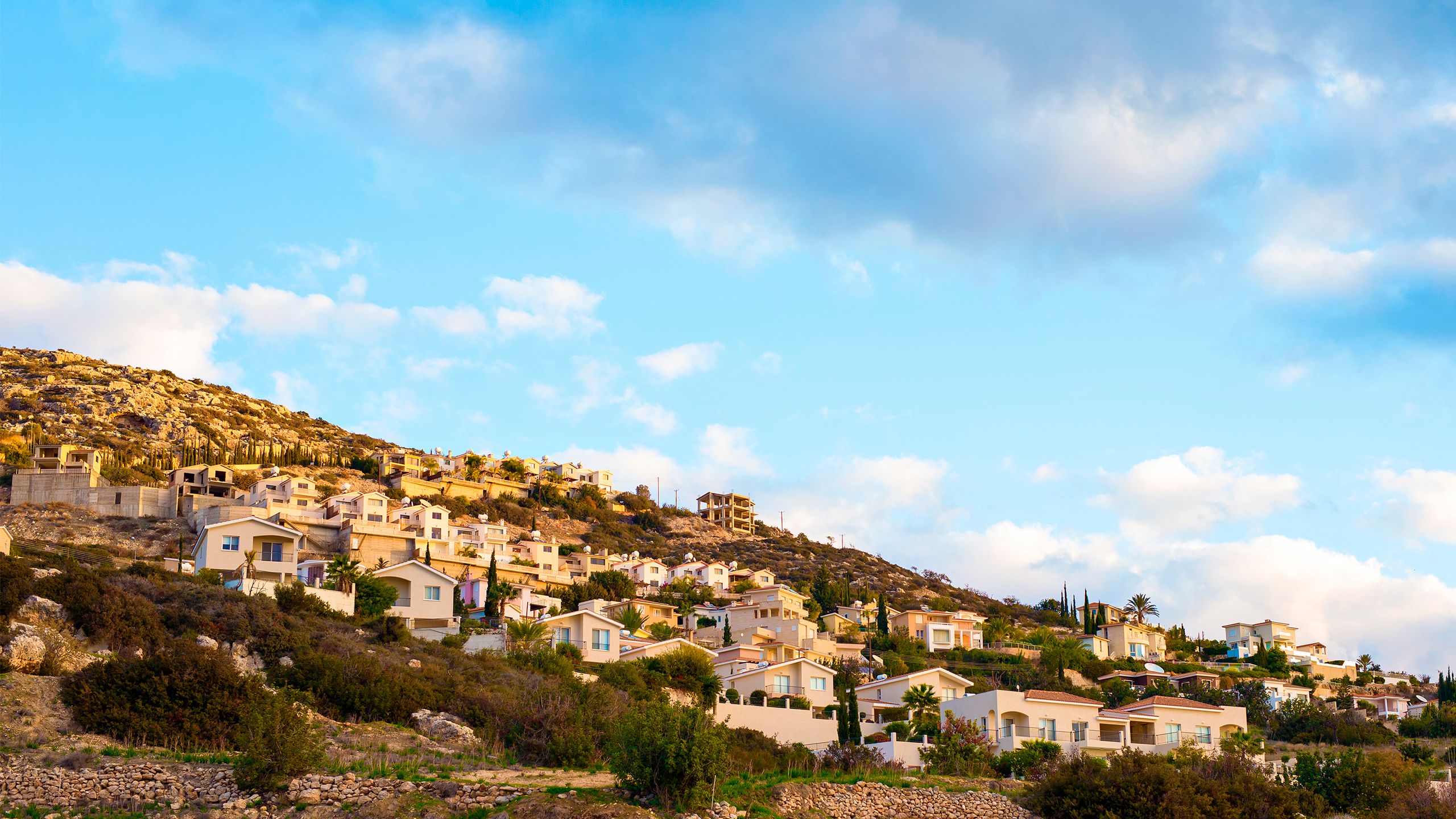
On the Karpas (Karpasia) peninsula, the long, narrow strip of land in Cyprus’s northeast where life still moves at a gentler pace, a year-and-a-half project set out to save something the island was quietly losing. The “Protecting Local Heritage” project, launched on 13 May and completed on 30 June 2017, took on what no museum case can: keeping a living culture breathing.
Funded by the European Union, run by the Büyükkonuk Eco-Tourism Association and supported by the Büyükkonuk community office, the project went after the part of Cyprus that is hardest to hold on to: the things people do rather than the things they build – local traditions, rituals and festive customs, and the everyday know-how of the crafts and the land. Skills like these last only when they pass from one generation to the next.
What the project set out to do
The programme tried to do a lot at once. It set up theatre and choir groups in Büyükkonuk (Komi Kebir), folk dance ensembles for young people and women, and a workshop for designing and sewing traditional costumes. A documentary captured the island’s living traditions on film, and at the centre of everything was the hands-on work of teaching old crafts to young people and adults across the rural Karpas.
The numbers tell the story. At least 200 people first heard about the project at community meetings. More than 450 residents went on to take part in the training workshops. Around 200 members of local folk, choir and theatre groups performed at experience-exchange events, and 44 people travelled to represent Cypriot culture and traditions at a folklore competition in Europe.
A festive start
On 13 May 2016, more than 200 people gathered in the rural Karpas district of Büyükkonuk (Komi Kebir) for the launch, opened by Kıymet Alibey, president of the Büyükkonuk Eco-Tourism Association. Food, music, a youth folk ensemble and a children’s drawing competition set the tone for everything that followed.
Choosing the teachers
Classes ran from September 2016 to June 2017, with instructors recruited through women’s group meetings and a local newspaper notice, then chosen by a scoring committee from the Eco-Tourism Association and the Büyükkonuk community office. For many, promoting their own classes on social media was new ground – and the confidence it built showed in both attendance and finished work.
Sesta: wheat straw transformed
Sesta is the art of weaving wheat straw into trays, bread baskets and small pieces for the home and kitchen, finished in traditional motifs of stalks dyed purple, orange, green and red. Every group started small – a single stalk and a cup coaster – before working up to baskets and large trays with ever more inventive patterns. In Dipkarpaz (Rizokarpaso) it caught on especially with children handling the raw straw for the first time, and the group even turned the old craft into tourist souvenirs, including small woven necklaces. The pieces drew buyers at experience-exchange events, on Europe Day and at the social festival, and sesta now looks set to live on in the villages, especially among the young.
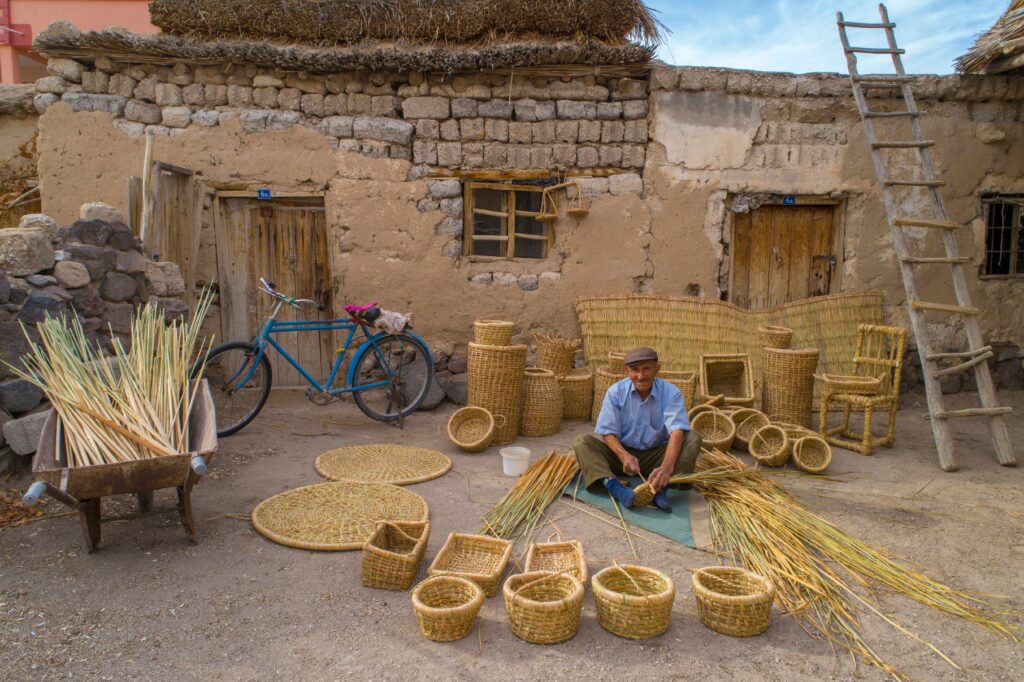
The two women guiding it bring decades between them. Fatma Er Yılmaz from Sipahi (Agia Triada) has taught for more than 30 years as a volunteer at the Bemsa cultural centre in Yeni Erenköy (Yialousa), and her skills cover sesta, tapestry, woodcarving, sewing, Lefkara and Lapta embroidery, chair weaving and lacemaking; she also sells pictures made from silkworm cocoons at the Büyük Han in Lefkoşa. Emine Özbayrak from Dipkarpaz (Rizokarpaso) runs the small Revaklı Guest House and has led the local women’s group for five years, and she shares everything she knows – woodcarving, sewing, chair weaving, sesta, tapestry and Lefkara embroidery – with the younger generation.
The craft of the broom
Broom-making, led by Kemal Deveci, was a hit with the children especially. The first one they made was a small wall broom: wild thyme flattened with a wooden mallet, a forked branch for the handle, and fresh terebinth bark to tie it all together. Some of the women went on to full-sized yard brooms, and the final day ended with the group gathering materials and cooking traditional Cypriot food over an open fire.
Kemal Deveci was a shepherd as a boy, taught the craft by his grandfather and father, and has been making brooms for over 40 years. He also turned an old school building into a museum of utensils, photographs, wedding dresses, costumes and tools, with a second wing in his own home. On top of that he makes bamboo flutes and sells them across Cyprus, and for the past nine years his knowledge of Cypriot culture has carried a weekly programme on Ada TV.
Chairs woven by hand
Chair weaving was just as popular as broom-making, and it pulled in women to try something long seen as men’s work. They got good at it fast, proud of the results, and were soon bringing old chairs from home to fix up. Their teacher, Abdullah Çerkez from Girne (Kyrenia), left school at 12 to train under master Hüseyin in Lefkoşa (Nicosia); he still sells to locals and expats, is one of only six people left doing the work, and could not believe how well the women did on their very first try. One of them, Fatma Er Yıldız, loved showing her finished chair to her husband, and another, who struggled with learning, slowly found her confidence sitting beside her mother in class – now that she has built a chair on her own, she feels she can do anything.
Baskets for cheese
The reeds for cheese baskets grow in the wetlands around Güzelyurt (Morphou) and Girne, and the baskets work as moulds for pressing the island’s halloumi (hellim) so the curd can firm up and hold its shape. The same reed earns its keep elsewhere too: a length of it makes the holes in homemade pasta, and the flowering kind turns into small brooms. Students learned where to find the reeds and how to prepare them, then how to weave a base and shape it around a bottle.
Spinning and weaving
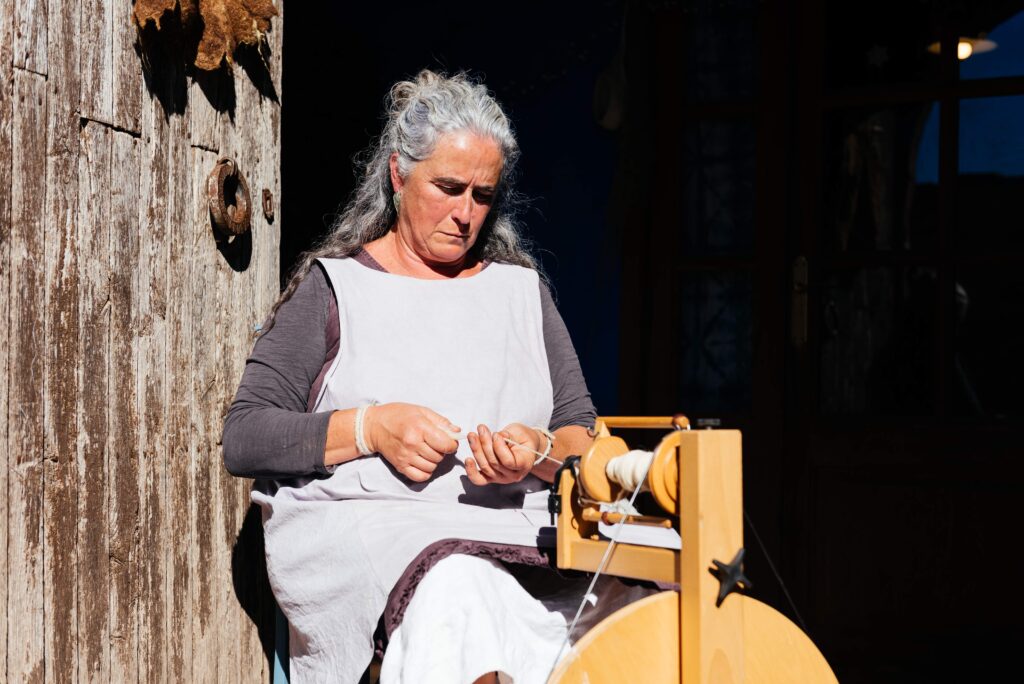
The spinning lessons began with the basics: cleaning and preparing the sheep’s wool, then spinning it into yarn on a traditional spindle. From there the weaving classes worked Cypriot patterns into small first pieces for a bag or a pendant. It is a craft that is fading fast, so the interest in it counted for a lot. In Büyükkonuk (Komi Kebir), Fatma Er Yıldız taught the women to build the weft by winding thread around nails set in a frame, and working shoulder to shoulder soon had them talking about turning the skill into income.
Weaving the date palm
Date palms are protected in Cyprus, and these baskets go back a long way: they were once used to load and unload cargo from ships. In the workshops, leaves left over from pruning were softened in water, then plaited and stitched into shape. Only a handful of older people still know how to make them, so it meant a lot to see others wanting to learn.
Needle and thread
The workshop that was meant to teach the use of sewing machines and the making of traditional FYROM costumes never got off the ground, held up by a lack of time and a few other snags. Hand-sewing classes went ahead across the region all the same. People stitched Cypriot designs for dresses, shirts, children’s clothes, tablecloths and curtains aimed at tourists, and the work was impressive across the board – from first-timers to old hands to the youngest in the room.
Finding the words in English
In a place that lives off visitors, being able to hold a simple conversation in English is worth a lot, and that was the whole idea behind these classes. Local schools lean heavily on grammar and leave little room for actually speaking, so the focus here was just chatting, comfortably, in plain English. The nerves showed early on, but with a little encouragement from the teachers everyone settled in. By the end they were filming their own dialogues, and on the FYROM trip several of the women used what they had learned to talk with hotel owners.
Lizzie Bannister from England taught in Büyükkonuk (Komi Kebir) and Yeni Erenköy (Yialousa), building confidence and vocabulary, and the women agreed to keep up weekly practice calls; their persistence and drive, she said, left a real impression, and a project this worthwhile was a joy to join. Marion Buchmüller worked with the group in Dipkarpaz (Rizokarpaso), where the many guest houses make English especially valuable – children and adults both gained from it, and the group resolved to meet once a month over an English-speaking breakfast.
The stage and the song
The Kemal Tunç Theatre Group formed in September 2016, with teacher Ertaç Hazer coaching voice and confidence as the group turned the Cypriot dialect and the plays of Kemal Tunç into sketches. The choir came together the same month under Buğçe, reviving old folk songs and building to a final performance at the closing ceremony on 30 June 2017, alongside a grand show in the former Republic of Macedonia (FYROM). New instruments arrived, and a group aged 8 to 40 took up the violin under Buğçe Çakır from Gazimağusa (Famagusta).
Out into the wild
An ecotourism project was never going to spend all its time inside. In January, Damla Beton ran a seminar that set ecotourism examples from around the world next to what was happening in Cyprus, with an open format that got participants talking about their own areas. February brought Tuberk Emirzade and a session on putting together a nature walk, covering the local history, archaeology, plants and wildlife of Dipkarpaz (Rizokarpaso).
Then, in June, a big group headed out to the Society for the Protection of Turtles (SPOT) on Alagadi beach. Damla Beton came along to talk about ecotourism; she volunteers with Kuşkor, which protects birds and their habitats in Cyprus, and she is passionate about fieldwork and looking after the island’s many bird species.
A heritage handed on
Through crafts and music, theatre and the careful study of nature, “Protecting Local Heritage” did more than document a way of life – it set it back in motion, returning rural Cyprus its living traditions and placing them in the hands of a new generation across the Karpas.